






平时做技术实践时,很多问题不是概念不会,而是细节没串起来。拿“Lua编程示例(八):生产者-消费者问题”来说,它看着像小点,放到项目里常会牵出环境、配置、兼容性和维护成本。下面按实际采用顺序,把思路、关键写法和容易踩坑的地方讲清楚,便于大家直接对照操作。
从实现思路看,这个问题是比较经典的啦,基本所有语言的多线程都会涉及到,但是没想到Lua的这个这么复杂 抓狂
看了好长时间才算看明白,先上个逻辑图:
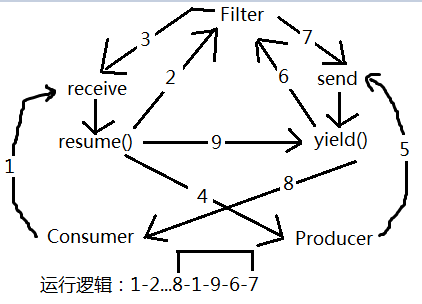
在这个场景下,开始时调用消费者,当消费者需值时,再调用生产者生产值,生产者生产值后停止,直到消费者再次请求。设计为消费者驱动的设计。
落到代码里,图画的不太好,能够先将Filter遮住,它是过滤器对两个程序之间传递的信息进行处理。去掉Filter逻辑就更清晰些了,就是两个“线程”(其实是两个协同程序)互相调用。resume回到yield处开始,兼容嵌套,得到到栈顶的yield位置。yield是非阻塞的“线程同步”。这到有点像linux里的管道通信。
 function receive(prod)
 print("receive is called")
 local status,value = coroutine.resume(prod)
 return value
end

function send(x,prod)
 print("send is called")
 return coroutine.yield(x)
end

function producer()
 return coroutine.create(function ()
 print("producer is called")
 while true do
 print("producer run again")
  local x = io.read()
  send(x)
 end
 end)
end

function filter(prod)
 return coroutine.create(function ()
 for line = 1,1000 do
  print("enter fliter "..line)
  local x = receive(prod)
  print("receive in filter finished")
  x= string.format("%5d %s",line,x)
  send(x,prod)
 end
 end)
end

function consumer(prod)
 print("consumer is called")
 while true do
 print("consumer run again")
 local x = receive(prod)
 print("retrun customer")
 io.write(x,"n")
 end
end

p = producer()
f=filter(p)
consumer(f)
运行结果:
consumer is called
consumer run again
receive is called
enter fliter 1
receive is called
producer is called
producer run again
fsy
send is called
receive in filter finished
send is called
retrun customer
  1 fsy
consumer run again
receive is called
enter fliter 2
receive is called
producer run again
gaga
send is called
receive in filter finished
send is called
retrun customer
  2 gaga
consumer run again
receive is called
enter fliter 3
receive is called
producer run again
......
您可能感兴趣的文章:
- Lua编程示例(一):select、debug、可变参数、table操作、error
- Lua编程示例(二):面向对象、metatable对表进行扩展
- Lua编程示例(三):稀疏表、双端队列、格式化输出、表和循环表的格式化输出
- Lua编程示例(四):Lua标准库之表库、字符串库、系统库
- Lua编程示例(五): C语言对Lua表的读取和添加
- Lua编程示例(六): C语言调用Lua函数
- Lua编程示例(七):协同程序基础逻辑